I learned about the latest government study while listening to The Early Show and was shocked. One of the recommendations is for women to delay mammograms until age 50.
The U.S. Preventive Services Task force, funded by the Agency for Healthcare Research and Quality did the study and published the results this week. The decision was based on the impact of mammography on breast-cancer deaths.
They also recommended that women between the ages of 50 and 74 have mammograms every two years instead of every year. On a personal note, I’ve always gone annually, and currently have a six month sonogram scheduled due to an unusual finding. I hate to think about the possibilities if I went every two years.
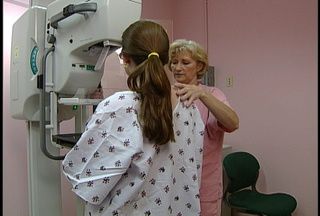
Another ridiculous recommendation is that women are no longer urged to do self-examinations since it doesn’t seem to significantly reduce the risk of death from breast cancer.
Does this sound ridiculous to you? Don’t we all know someone who found a lump during self-examination, then went to the doctor and learned it was malignant?
I was hoping that women wouldn’t listen, but I heard on another news show last evening that one mammography center received more cancellations yesterday than ever before.
I don’t get it. I was guessing that women wouldn’t listen. I have a hunch that the majority won’t because most of us have known someone who benefitted from early detection. Even one life saved from preventative medicine is enough.
It also saddens me that the money spent on this study could have been better spent on finsing a cure for breast cancer.
What do you think? You are welcome to post here, or in the forums at BoomerWomenSpeak.com.

Get E-Mail Updates 


{ 5 comments… read them below or add one }
The results of the study may be right, but the recommendations based on those results are unequivocally wrong.
Because my mother was diagnosed with breast cancer at the age of 31, my first mammogram was strongly recommended and then done when I was 21. Since then I’ve had over a dozen mammograms and have religiously self-examined. I initially had mixed feelings about the recommendations because of two things. 1) Nothing has ever come of all these exams (knock on wood) and the mammograms and doctors’ exams were excruciatingly painful. I have another one in a few weeks and I know I will be in tears before I even park my car. 2) I have personally known many women who were saved by early detection and others who were in a great deal of pain for an extended period of time before they died because the cancer wasn’t caught in time, or at all.
The results appear to be the number of exams (self and doctor) held up against the number of women whose lives were saved. This is a problematic way of seeing things no matter what you’re talking about. A lot of people are suffering needlessly because of our societal ideal that death is the worst thing, and that what we do as living persons should be measured by how much success we’ve had at keeping them out of the clutches of death.
Robert Fulghum once said, “There are many ways to lose your life. Death is only one of them.” My mother’s battle with cancer was horrible. Her treatment would be unthinkable today, and her follow up care was nonexistent. The woman those doctors treated did live. My mother, however, did not come home from that hospital – ever. She was medically neglected, her family was never properly advised, she fell into and crawled out of depression, she developed lymphedema during her five year “death watch” (nothing says “survivor” like that catchy phrase) and she died of liver cancer. But hey, they “saved” her, right?
Do understand, however, that this study’s authors aren’t the only (or first) culprits in the long line of people who purport to help but instead actively discourage women from doing what is right. Holding up celebrities as models of breast cancer survivorship is just sick because the message they send is so not the truth: “Hey you there in the trailer park, here’s a list of women with money (read: decent physical and mental healthcare to include plastic surgery, dieticians, support systems, etc) who did what you can’t possibly hope to do. Good luck with your cancer and here’s some pink thing or other.”
The study authors’ recommendation that the average women just up and forfeit what little control she does have over her own health is not only ludicrous, it’s criminal. The conspiratorialist might even suggest this is but one of many ways to slice and dice at healthcare costs rather than treat women like people – many of whom are no longer of childbearing age and aren’t always thought to be among society’s major contributors anymore.
Statistics mean nothing to the individual, and they don’t define the actions that lead to discovery or death, which is to say that there have been many mammograms done on women who were, later, found to have had cancer all along. I was in the hospital this time last year with a woman who underwent a double mastectomy by a second doctor because the first doctor didn’t do the lumpectomies that would’ve halted the cancer.
The recommendations of this study sound eerily like that line from Poltergeist (“all are welcome, into the light”), echoing the archaic sentiment that doctors are gods and patients, women especially, should just leave well enough alone. Early detection (not to mention awareness and education) would’ve saved my mother’s life – not just her body.
The U.S. Preventive Services Task force can tell their story walkin’ all the way to my mother’s grave.
I am still reading about the repercussions of the mammograpy guidelines. I’m glad that Kathleen Sebelius is trying to reassure us.
Listening to NPR on my way home tonight, I heard a Dr. Biever speak about these issues. It seems that the new guidelines are based on finding one cancer within 1600 women who have had mammograms for the 50 and over group. Whereas the 40 and over group have one cancer within 1900 women who have mammograms.
Dr. Biever thought that the difference between 1600 and 1900 women is miniscule. I have to agree with this. She did, however think that teaching a self-exam for breasts was not a good tool. Dr. Biever thinks that women know their bodies, and that they know when something doesn’t look or feel right. She feels that the self-exam on a regular basis finds many false positives.
I would rather have the false positives, thank you! As a women, I don’t want to see us going backwards in health care. By limiting mammograms, this may happen.
Link:
http://www.npr.org/templates/story/story.php?storyId=120583674
Sorry, that is Dr. Bevers, not Bievers.
I was surprised–make that shocked–by the announcements about delaying mammograms. I am not the poster child for having annual exams, but the fact that it is no longer recommended makes me uncomfortable–a euphemism for something stronger.
If you have even the slightest inkling that you need this test, get it. If insurance won’t pay, maybe you can find a free clinic. Don’t let the new recommendations steal your health.
:::stepping down from my soapbox:::
B. Lynn Goodwin
http://www.writeradvice.com
Author of You Want Me to Do WHAT? Journaling for Caregivers
People are now more aware of cervical cancer than breast cancer.